logo
Courses
    logo
  • Courses
  • Corporate Training
  • Testimonials
logo

Address

Suite 610 - The Business Center, Opp to Burjuman Centre, Adjacent to Burjuman Metro Station Exit 4, Khalid Bin Walid Street. P.O.Box: 94743 Dubai, UAE

Quick Links

  • About Us
  • Blog
  • Corporate Training
  • Contact Us
  • LP Talks
  • Student Login
  • Privacy Policy
  • Terms and Conditions
  • Refund Policy
  • Pay Now

Contact us

  • info@learnerspoint.org
  • +971 (04) 4038000
  • 800SKILL(75455)
  • +1 347 637 6133
  • +44 20 4524 4199
  • +966112036111
  • +91 97462 22034
  • +971566335515

Stay connected

Privacy Policy

IPSAS Certification

Covers both accrual and cash basis reporting frameworks

Reflects the latest IPSAS updates and IFAC guidelines

Builds skills valued across GCC public sector organizations

Prepares learners for globally recognised IPSAS certification

Keeps participants up to date with industry standards

4.9/5

3900 Enrolled

Overview

What you will master with us

  • Prepares professionals for IPSAS Certification, enhancing financial report credibility
  • Provides essential accounting guidelines for reliable public sector financial reporting
  • Develops proficiency in IPSAS Board's accrual-based standards
  • Ensures global adherence to robust financial reporting standards
  • Recognized globally as the gold standard for public-sector accounting
  • Trains professionals in comprehensive financial presentation guidelines

Learning Objectives

Once you complete the course, you will master:

  • 1

    Understand IPSAS framework basics and its public sector relevance

  • 2

    Recognize IPSAS core values: transparency, accountability, comparability

  • 3

    Apply IPSAS rules for assets, liabilities, revenues, and expenses consistently

  • 4

    Implement smooth transition strategies to IPSAS standards

  • 5

    Learn IPSAS financial statement presentation requirements

  • 6

    Embrace detailed IPSAS disclosure obligations, including accounting policies

  • 7

    Gain practical skills in IPSAS adoption for effective financial management

  • objective-image

    Ready to get started?

  • Overall ratings by our students

    Upcoming sessions

    Dr. Srinivas, PhD., MSc., MBA, LLB, CMA, CPA, PMP

    Dr. Srinivas Reddy is a skilled Corporate Trainer with a solid finance background and diverse credentials. He delivers effective learning solutions for finance and accounting teams, specializing in financial, cost, and tax accounting.

    Dr. Reddy, a resourceful trainer, creates engaging and effective learning environments. He is dedicated to assessing training needs and closely monitors progress to provide relevant guidance, boosting participants' skills and productivity.

    Dr. Reddy is not just a corporate trainer; he’s also deeply involved in community service. His commitment to both personal and professional growth makes him stand out.

    Core Competencies:

    • Exceptional competency in the finance domain
    • Outstanding communication & presentation skills
    • Strong teaching proficiency
    • Expertise across different verticals

    Professional Qualifications:

    • Certified Public Accountant (CPA), The American Institute of Certified Public Accountants, U.S.A
    • Certified Management Accountant (CMA), The Institute of Management Accountants, USA
    • Certified Fraud Examiner (CFE), Association of Fraud Examiners, USA
    • Certified Cost Accountant (ICWA), The Institute of Cost and Works Accountants of India, India
    • Project Management Professional (PMP), Project Management Institute
    Dr. Srinivas, PhD., MSc., MBA, LLB, CMA, CPA, PMP

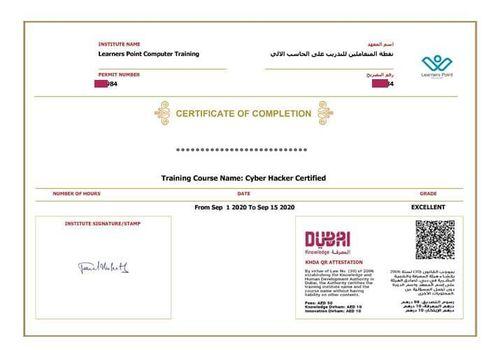
    KHDA Certificate

    Earn a KHDA attested Course Certificate. The Knowledge and Human Development Authority (KHDA) is the educational quality assurance and regulatory authority of the Government of Dubai, United Arab Emirates.

    Certifcate-Image0

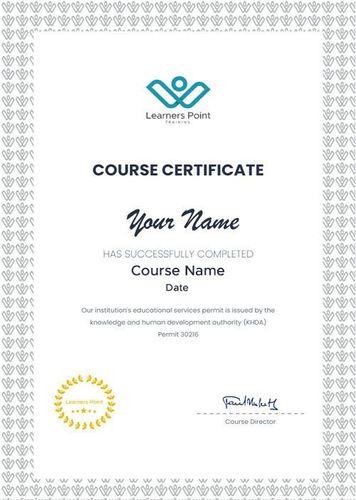
    Learners Point Certificate

    Earn a Course Completion Certificate, an official Learners Point credential that confirms that you have successfully completed a course with us.

    Certifcate-Image1

    Related courses

    Curriculum

    • Understanding the role of IPSAS in global public financial management
    • Overview of public sector accounting vs private sector accounting
    • Objectives, users, and qualitative characteristics of financial reporting
    • IPSAS conceptual framework and reporting boundaries
    • Structure and components of financial statements under IPSAS
    • Statement of financial position, performance, and cash flows
    • Changes in net assets/equity and notes disclosures
    • Revenue recognition principles in exchange transactions
    • Accounting for taxes and transfers (non-exchange transactions)
    • Recognition, measurement, and disclosure requirements
    • Recognition and measurement of public sector assets
    • Depreciation, impairment, and revaluation models
    • Intangible assets and service concession arrangements
    • Recognition of provisions, contingent liabilities, and assets
    • Public sector obligations and long-term liabilities
    • Employee benefits accounting (short-term, long-term, post-employment)
    • Linking IPSAS with budgeting frameworks and fiscal discipline
    • Budget vs actual performance analysis
    • Financial ratios and indicators for public sector entities
    • Concept of control and reporting entities in public sector
    • Consolidation principles and group financial statements
    • Accounting for associates and joint arrangements
    • Differences between cash-based and accrual-based accounting
    • Benefits and challenges of IPSAS adoption
    • Transition strategies and implementation roadmap
    • Classification and measurement of financial instruments
    • Risk exposure in public sector (credit, liquidity, market risks)
    • Hedge accounting basics and disclosures
    • IPSAS adoption challenges and global best practices
    • Strengthening governance through financial transparency
    • Role of leadership in driving IPSAS implementation

    Public Sector Transformation Scenario

    Participants will assess current financial reporting gaps in a government entity, design IPSAS-compliant financial statements, evaluate risks, governance, and compliance challenges, and develop strategic financial recommendations. They will present their findings to a simulated executive board.

    Frequently asked questions

    IPSAS stands for International Public Sector Accounting Standards. These are established standards that provide professionals with the necessary information for reporting finances in the public sector. IPSAS aims to harmonise the process of financial reporting across the globe in the public sector, ensuring transparency, consistency, and accountability. The standards are created by the IPSAS Board and are designed to improve the quality of financial management in the public sector by using accrual-based accounting principles. They are essential for governments and other public sector organizations to manage financial resources effectively, maintain financial stability, and support informed decision-making.

    IPSAS Certification will equip you with the skills and knowledge needed to understand and implement the distinctive principles of public sector accounting. After completing the certification, you will be able to confidently manage the specific reporting requirements of governments and public bodies, such as accrual accounting and financial disclosure standards. The certification also prepares you for roles in public sector finance, like Financial Analyst or Accountant in government institutions, and facilitates your transition from private sector to public sector accounting.

    The IPSAS Certification aims to enhance your understanding of public sector accounting and reporting standards. It will support you in learning how to prepare, analyse, and interpret financial statements in line with international best practices. By applying IPSAS principles, you will be able to improve the transparency, consistency, and accuracy of financial reports within your organisation to meet global standards. Completing the certification will also help you stay updated with evolving public sector regulations, making you a valuable team member and broadening your career opportunities in government finance roles.

    The benefits of the IPSAS course are as follows:

    1) Greater Accountability and Transparency
    2) Better Decision-Making
    3) Professionalisation and Access to Talent
    4) Improved Efficiency
    5) Sound Financial Management

    After completing this certification, professionals can pursue roles including:

    • Public Sector Accountant
    • Government Finance Officer
    • Public Sector Auditor
    • Financial Reporting Analyst
    • Finance Consultant

    Apart from theoretical sessions, the IPSAS training consists of:

    1) Face-to-Face Doubt Clearing Sessions
    2) Interaction with Industry Experts
    3) Tips to ace the examination on the first attempt

    Yes, a course completion certificate is provided by our training institute Learners Point Academy after completion of the IPSAS Course.

    Yes, IPSAS training covers the latest standards and updates.

    The course content for the IPSAS Course is as follows:

    1) Module 1: IPSASB
    2) Module 2: Financial Statement Presentation and Accounting Policy
    3) Module 3: Financial Performance
    4) Module 4: Accounting for Assets & Liabilities
    5) Module 5: Consolidation
    6) Module 6: Cash Basis IPSAS
    7) Module 7: First-Time Adoption of Accrual-Based IPSAS
    8) Module 8: Forthcoming Proposals for Change

    Many training institutes offer IPSAS training. However, Learners Point Academy is a pioneer institution providing IPSAS training and is considered one of the best institutions.

    Learners Point offers IPSAS Certification training under KHDA approval, delivered by certified instructors with practical public sector finance experience. The 30-hour program is structured to accommodate working professionals, with flexible scheduling options. Learners benefit from doubt-clearing sessions, exam preparation guidance, and a course completion certificate upon finishing. The academy also delivers this program across multiple GCC locations.

    The "https://learnerspoint.org/blog/ipsas-ifrs-major-differences"major differences between the IFRS & the IPSAS Course are as follows:

    1. IFRS primarily focuses on providing investors, lenders, and other users with knowledge about the overall financial performance and position

    2. IPSAS Course primarily provides information regarding the resources utilized by the entity and the cost of service delivery

    IPSAS Certification opens career opportunities in government, NGOs, international organisations, and any public sector accounting roles.

    While The training focuses on the public sector, private sector professionals can benefit if they work with government or non-profit organizations.

    Working professionals who aspire to balance their studies and workplace duties can do so with the flexibility offered by our IPSAS Certification in Dubai. To assist candidates in earning this certification, we also provide this training in several locations across the world.

    • IPSAS Certification in Saudi Arabia
    • IPSAS Certification in Kuwait
    • IPSAS Certification in Qatar
    • IPSAS Certification in Oman
    • IPSAS Certification in Bahrain

    The exam duration of IPSAS Certification is 1 hour.

    Yes, online training is available for IPSAS.

    Do you want to learn more about Learners Point Academy?

    • Learn more about courses
    • Understand about our methodology
    • Let’s talk about Corporate trainings
    • Anything else that you want to know, we are here for you!

    Let's chat!

    • Afghanistan+93
    • Albania+355
    • Algeria+213
    • Andorra+376
    • Angola+244
    • Antigua and Barbuda+1268
    • Argentina+54
    • Armenia+374
    • Aruba+297
    • Australia+61
    • Austria+43
    • Azerbaijan+994
    • Bahamas+1242
    • Bahrain+973
    • Bangladesh+880
    • Barbados+1246
    • Belarus+375
    • Belgium+32
    • Belize+501
    • Benin+229
    • Bhutan+975
    • Bolivia+591
    • Bosnia and Herzegovina+387
    • Botswana+267
    • Brazil+55
    • British Indian Ocean Territory+246
    • Brunei+673
    • Bulgaria+359
    • Burkina Faso+226
    • Burundi+257
    • Cambodia+855
    • Cameroon+237
    • Canada+1
    • Cape Verde+238
    • Caribbean Netherlands+599
    • Cayman Islands+1
    • Central African Republic+236
    • Chad+235
    • Chile+56
    • China+86
    • Colombia+57
    • Comoros+269
    • Congo+243
    • Congo+242
    • Costa Rica+506
    • Côte d'Ivoire+225
    • Croatia+385
    • Cuba+53
    • Curaçao+599
    • Cyprus+357
    • Czech Republic+420
    • Denmark+45
    • Djibouti+253
    • Dominica+1767
    • Dominican Republic+1
    • Ecuador+593
    • Egypt+20
    • El Salvador+503
    • Equatorial Guinea+240
    • Eritrea+291
    • Estonia+372
    • Ethiopia+251
    • Fiji+679
    • Finland+358
    • France+33
    • French Guiana+594
    • French Polynesia+689
    • Gabon+241
    • Gambia+220
    • Georgia+995
    • Germany+49
    • Ghana+233
    • Greece+30
    • Greenland+299
    • Grenada+1473
    • Guadeloupe+590
    • Guam+1671
    • Guatemala+502
    • Guinea+224
    • Guinea-Bissau+245
    • Guyana+592
    • Haiti+509
    • Honduras+504
    • Hong Kong+852
    • Hungary+36
    • Iceland+354
    • India+91
    • Indonesia+62
    • Iran+98
    • Iraq+964
    • Ireland+353
    • Israel+972
    • Italy+39
    • Jamaica+1876
    • Japan+81
    • Jordan+962
    • Kazakhstan+7
    • Kenya+254
    • Kiribati+686
    • Kosovo+383
    • Kuwait+965
    • Kyrgyzstan+996
    • Laos+856
    • Latvia+371
    • Lebanon+961
    • Lesotho+266
    • Liberia+231
    • Libya+218
    • Liechtenstein+423
    • Lithuania+370
    • Luxembourg+352
    • Macau+853
    • Macedonia+389
    • Madagascar+261
    • Malawi+265
    • Malaysia+60
    • Maldives+960
    • Mali+223
    • Malta+356
    • Marshall Islands+692
    • Martinique+596
    • Mauritania+222
    • Mauritius+230
    • Mexico+52
    • Micronesia+691
    • Moldova+373
    • Monaco+377
    • Mongolia+976
    • Montenegro+382
    • Morocco+212
    • Mozambique+258
    • Myanmar+95
    • Namibia+264
    • Nauru+674
    • Nepal+977
    • Netherlands+31
    • New Caledonia+687
    • New Zealand+64
    • Nicaragua+505
    • Niger+227
    • Nigeria+234
    • North Korea+850
    • Norway+47
    • Oman+968
    • Pakistan+92
    • Palau+680
    • Palestine+970
    • Panama+507
    • Papua New Guinea+675
    • Paraguay+595
    • Peru+51
    • Philippines+63
    • Poland+48
    • Portugal+351
    • Puerto Rico+1
    • Qatar+974
    • Réunion+262
    • Romania+40
    • Russia+7
    • Rwanda+250
    • Saint Kitts and Nevis+1869
    • Saint Lucia+1758
    • Saint Vincent and the Grenadines+1784
    • Samoa+685
    • San Marino+378
    • São Tomé and Príncipe+239
    • Saudi Arabia+966
    • Senegal+221
    • Serbia+381
    • Seychelles+248
    • Sierra Leone+232
    • Singapore+65
    • Slovakia+421
    • Slovenia+386
    • Solomon Islands+677
    • Somalia+252
    • South Africa+27
    • South Korea+82
    • South Sudan+211
    • Spain+34
    • Sri Lanka+94
    • Sudan+249
    • Suriname+597
    • Swaziland+268
    • Sweden+46
    • Switzerland+41
    • Syria+963
    • Taiwan+886
    • Tajikistan+992
    • Tanzania+255
    • Thailand+66
    • Timor-Leste+670
    • Togo+228
    • Tonga+676
    • Trinidad and Tobago+1868
    • Tunisia+216
    • Turkey+90
    • Turkmenistan+993
    • Tuvalu+688
    • Uganda+256
    • Ukraine+380
    • United Arab Emirates+971
    • United Kingdom+44
    • United States+1
    • Uruguay+598
    • Uzbekistan+998
    • Vanuatu+678
    • Vatican City+39
    • Venezuela+58
    • Vietnam+84
    • Yemen+967
    • Zambia+260
    • Zimbabwe+263

    Learn now, pay later

    Dive into your course now and pay in installments